
Every Menu Is a Minefield
What travel taught me about food, fear, and trusting strangers with sharp knives.

They say travel broadens your palate.
Mine just tries to kill me.
Pineapple, avocado, strawberry, walnuts, pecans, bananas — all banned from my personal paradise. And the cruelest part? I know exactly what every one of them tastes like.
It started at thirty, right after a major illness. One day I was fine. The next, my body decided to go rogue. These days, every restaurant feels like a trust exercise — with strangers holding sharp knives.
I’ve called ahead, flagged the allergy, begged the waiter — only to have a restaurant in Cabo serve me a dessert crowned with strawberries “for presentation.” Or a Mexican soup with avocado hidden at the bottom, as if it were a fun surprise.
Nigel has become my food bouncer. He can spot a rogue pineapple from ten feet away. When we travel, he interrogates waiters like a friendly MI6 agent: polite, persistent, and absolutely unwilling to die for brunch.
Meanwhile, my brother has celiac disease — the real kind, not the “I feel better without bread” version. He discovered it late, like me, and learned that one trace of gluten isn’t a tummy ache; it’s intestinal damage. We once went out for sushi in Dallas. It wasn’t the soy sauce that got him — it was the wasabi paste. Gluten. In. Wasabi. He was sick for days.
Our family tree could be sponsored by the pharmaceutical industry. I’m allergic to half the produce aisle, lactose intolerant, and my brother can’t touch wheat. My friend with Crohn’s, on the other hand, goes to Italy and eats everything — pizza, pasta, arancini balls, four-cheese lasagna — and feels better than she does at home.
Maybe it’s the flour. Maybe it’s the additives. Maybe it’s that U.S. food is slowly embalming us.
And somewhere along the way, I lost beer too. I didn’t realize it until a music festival in Colorado. One minute I was dancing with friends; the next, I was in the ER, face swelling, chest tightening — the kind of reaction that makes everyone suddenly remember your blood type. That’s when I figured out beer wasn’t just a bad idea — it was an anaphylactic one.
Some people still think food allergies are a punchline. Or a cry for attention. Or both. A few girls at that same festival rolled their eyes while I turned red and struggled to breathe.
They’re not friends today.
Now I think it’s barley, but who knows? My body’s a mystery novel that won’t quit. I still love the smell of a good pub — that malty, nostalgic warmth — but one sip and I’m in medical-drama territory. So I drink wine now, like a woman who’s learned to pick her poisons carefully.
The Escolar Incident
During my divorce, when my body was running mostly on adrenaline and sarcasm, I found solace in sushi. One roll in particular: super white tuna.
It was buttery, silky, melt-in-your-mouth perfection. I ate it twice a week for months, convinced I’d discovered happiness in raw form.
Then my stomach turned against me. I blamed stress, or grief, or maybe God. I lost twenty pounds and decided I must have stomach cancer.
Spoiler: it wasn’t stress.
It was Escolar.
Turns out the fish marketed as “super white tuna” in the U.S. is actually banned in Japan — because it contains indigestible wax esters that can cause, let’s just say, memorable digestive consequences.
Why do American menus have to warn you that oysters might give you hepatitis, but not that your sushi fish could send you sprinting for the exit?
I still eat raw oysters, by the way. At least I know the risk.
The Global Trust Test
In the U.S., especially outside big cities, menus often read like mystery novels. You never really know who did it — or what’s in it.
One study found that only about 9% of U.S. restaurant menus list allergens, and fewer than 4% include precautionary statements. Yet over half of all allergic reactions in restaurants happen even after diners warn the staff.
“Over half (53.9%) of food-allergy reactions in U.S. restaurants occur even after diners notify the staff.”
— MDPI Journal of Nutrients, 2024
Across the Atlantic, it’s another story. It’s part of the dining culture, not an afterthought.
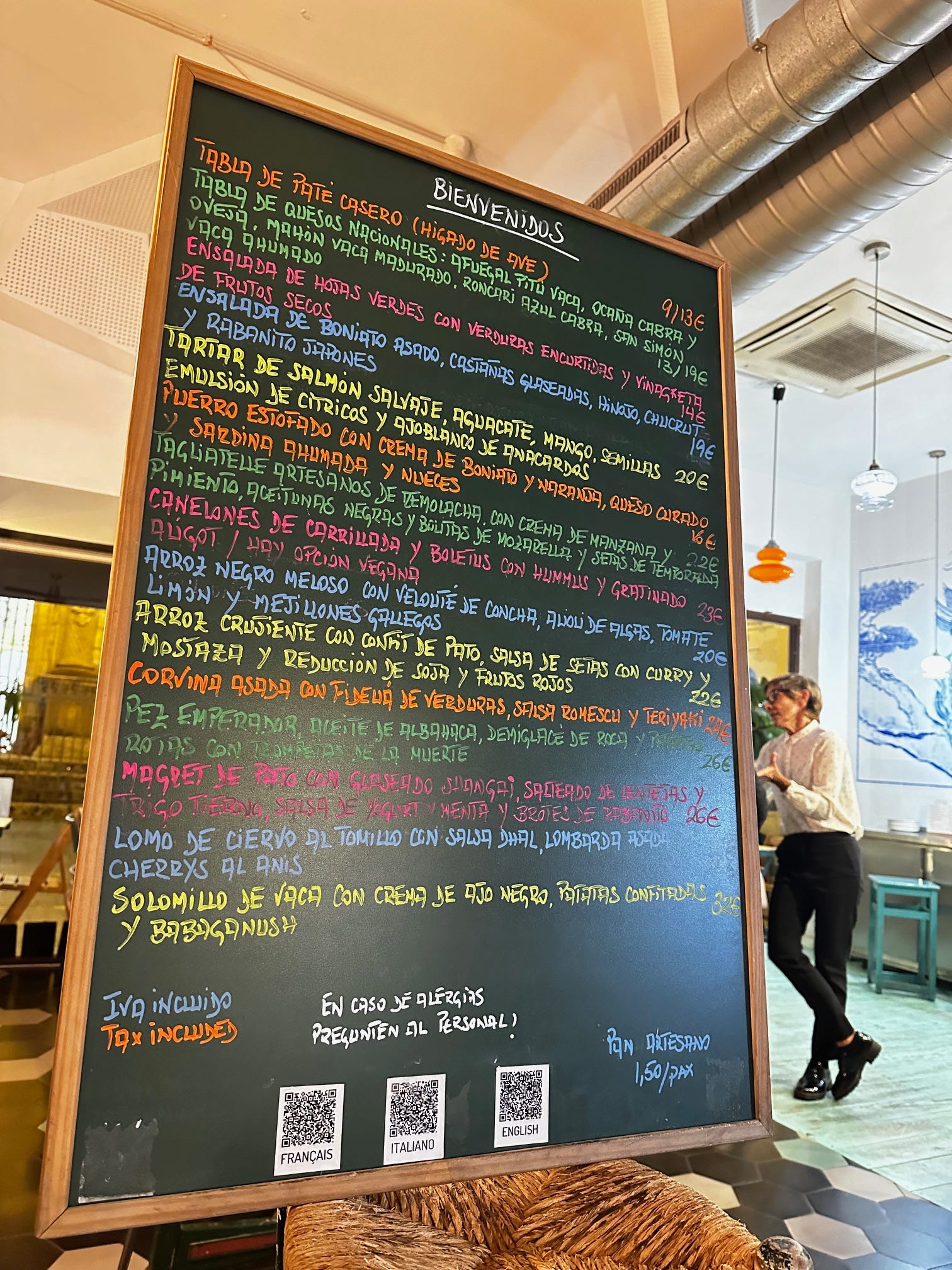
“In Europe, restaurants are legally required to declare 14 major allergens — and many go beyond, labeling dishes even on chalkboard menus.”
— EU Regulation 1169/2011
You feel it immediately — that baseline trust. The same meal that feels dangerous at home becomes relaxing abroad. There’s no pleading, no apologizing for asking questions, no chef rolling his eyes because you can’t have the “drizzle.”
Then there’s the whole additives problem. The U.S. and Europe regulate food very differently.
“U.S. processed foods contain on average 63% more additives than comparable products in France or Germany.”
— Yuka Global Food Study, 2023
In the States, thousands of additives are approved under the “generally recognized as safe” umbrella — a category that sounds reassuring until you realize it means “no one’s proven it will kill you yet.” In the EU, by contrast, they take the “precautionary principle” approach: if it might cause harm, it doesn’t make the list.
So when my friend eats her way through Rome with no Crohn’s flare-up, maybe it’s not a miracle. Maybe it’s just fewer ingredients per bite.
Travel makes you aware of this in ways you can’t unsee.
The difference between “fresh” and “factory” becomes personal.
In Houston, I scan every ingredient.
In Italy, I just eat.
What Travel Taught Me (The Hard Way)
If there’s a lesson here, it’s this:
Learn before you go which of your allergens is trending.
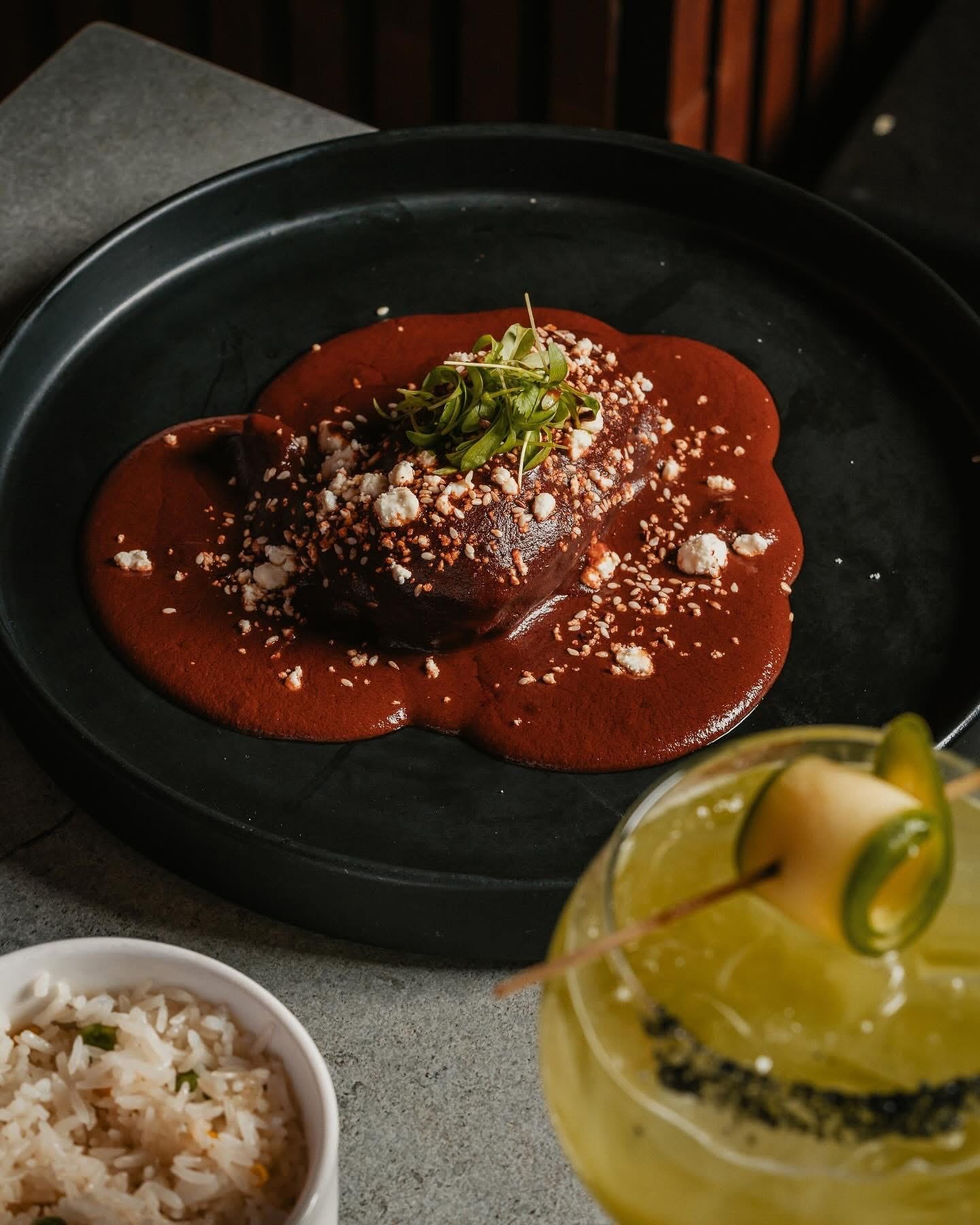
In Mexico City, for example, pineapple and avocado are everywhere — even the mole. (Ask me how I know.)
Bring an EpiPen. Translate your allergies into the local language. Keep a printed card in your wallet and a photo of it on your phone. Because you never know when you’ll end up at a farmhouse table after a random adventure, and “I’m allergic to pineapple” is not something you want to Google-translate mid-anaphylaxis.
Some people collect stamps when they travel. I collect survival strategies.
Freedom on the road isn’t eating anything.
It’s eating safely what you love — and trusting a place to know that your body matters.
If you see me at a restaurant with Nigel, don’t worry.
He’s not angry.
He’s just negotiating my survival.
Author’s Note
Slow travel sharpens your senses — not just to beauty, but to risk.
You start reading menus the way other people read maps.
You learn which questions matter.
You realize that awareness isn’t anxiety — it’s protection.
I’ll never be a carefree traveler, and honestly, I don’t want to be.
Attention is its own kind of freedom.
It keeps me alive long enough to taste the next adventure — minefield and all.
If today’s story stirred something in you — that mix of longing, fear, curiosity, and the quiet thought “Maybe I could do this… if I felt safe enough” — I made something that might help.
I put together a free walkthrough of the Slow Travel Toolkit — the same starter tools Nigel and I used long before we ever took a leap.
Inside the full Toolkit, there’s even a Safety & Logistics tab — the invisible layer behind the confidence we carry on the road.
But the free version is where you begin. It includes:
• the introduction guide
• the tools & apps we rely on (including the ones that help us stay safe)
• the simple budget builder we used to decide whether this life was even possible
If you’ve been hovering at the edge of this kind of life, you’re not alone.
Most people don’t need more courage — just a little clarity and a way to feel safer trying something new.
Every slow-travel story starts with one steady, honest step.
💛 Kelly
On our month-long trip to Germany recently, we found that we both felt better overall after detoxing from U.S. food for a few weeks. While we don't have food intolerances or allergies to worry about, even the strongest constitutions are affected by the lack of real food in our food in the States. One problem is that we, as a society in general, don't know anything different and are therefore unlikely to push for the change that needs to happen. -Ari
Oh wow Kelly, this was such an eye-opening read. I'm sorry you have to navigate so many allergies while travelling, that takes a level of vigilance most of us never have to consider. I know I’m lucky to live in Europe where allergens are taken more seriously, and this really made me appreciate that privilege rather than take it for granted. Thank you for sharing this so honestly.