
Who Are You When the Context Changes?
Why identity feels slippery during reinvention — even when the change is chosen

Editor’s note: This essay is about identity during change — not reinvention as a goal, but as a side effect.
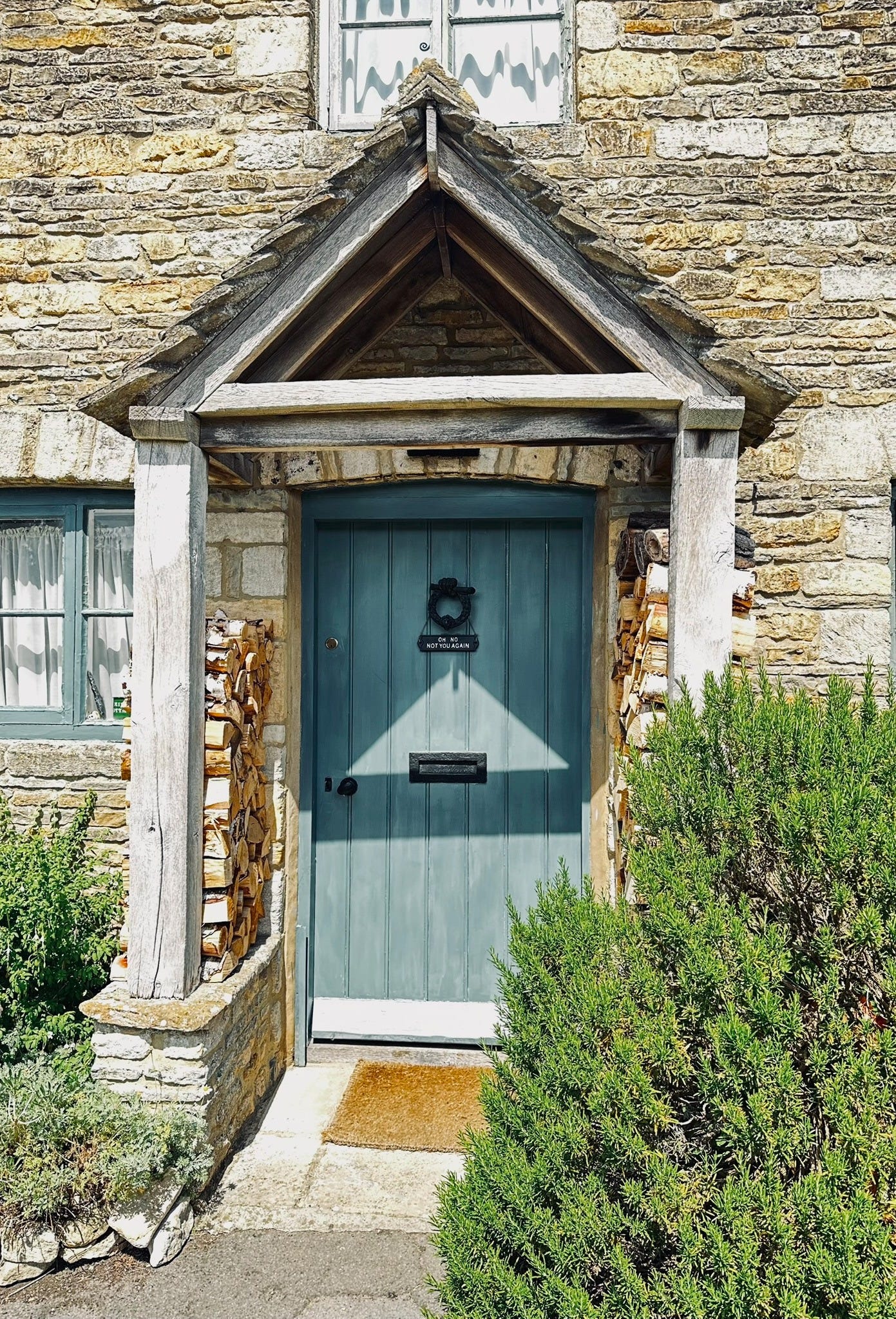
I’ve been shape-shifting longer than I realized.
As a kid, fitting in felt urgent.
Necessary.
Not aspirational — survival-adjacent.
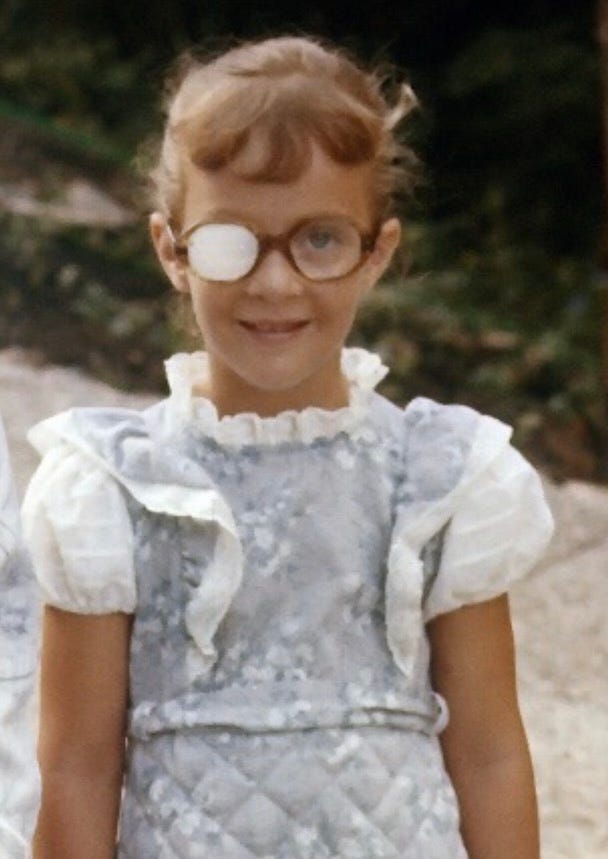
I wore an eye patch.
Had teeth big enough I could slip my pinky between them.
Skipped kindergarten, which meant I was always the youngest in the room — a full year behind at an age where that gap mattered.
So I learned early how to watch people.
How to mirror tone.
How to adjust just enough to belong.
Later, that instinct found more respectable disguises.
Church three times a week.
Workplaces with unspoken rules.
Cities with personalities you’re expected to absorb.
I got very good at reading the room and becoming legible inside it.
Which is why it surprised me how destabilizing it felt when those rooms disappeared.
Not in a dramatic, burn-it-down way.
Quietly.
Incrementally.
The belief systems that once organized my weeks loosened.
The routines that anchored my days softened.
The roles that reflected me back to myself stopped doing that work.
Nothing broke.
But the scaffolding fell away.

And suddenly the question wasn’t, “Who am I becoming?”
It was, “How much of who I’ve been was context doing the work for me?”
This is usually the moment people call it an identity crisis.
It can feel like questioning everything at once.
Am I actually spiritual — or just accustomed to structure?
Am I an extrovert — or just practiced at performance?
Why do I feel oddly unmoored when nothing is technically wrong?
The symptoms look familiar.
A sense of aimlessness.
Low-grade anxiety.
A pull toward new interests that don’t quite stick.
A quiet pressure to fit in everywhere again, just to feel oriented.
But I’ve come to believe most identity crises aren’t failures of self.
They’re withdrawals of context.
For years, place and routine have been doing quiet identity labor for us.
Jobs.
Schedules.
Geography.
Social ecosystems.
When those change — by choice or by force — the feedback loop disappears.
And suddenly, you’re left alone with the parts of yourself that were always there, but never had to speak up.
That moment is especially unsettling for high-functioning people whose identity is wrapped around competence or success.
As Arthur C. Brooks noted, when identity is built on being successful, the real fear isn’t failure — it’s erasure.
Not losing the role.
Losing the self that role made visible.
This is where travel speeds things up.
Not because it causes identity loss.
But because it removes buffers.
New places strip away muscle memory.
They interrupt automatic behaviors.
They surface traits you didn’t know were situational.
Travel is a 10x accelerator — but the process itself isn’t unique to travel.
It happens after divorce.
After retirement.
After illness.
After kids leave home.
After belief systems shift.
After any moment where life stops confirming who you thought you were.
The opportunity isn’t to rush into reinvention.
It’s to notice what remains when context steps back.
Micro-action for this week:
Notice one behavior that only exists because of where you are — not who you are.
No fixing. No reframing. Just observe.
Because identity doesn’t disappear when context changes.
It waits to see what you’ll choose without it.
– Kelly
Want to go deeper?
This week’s companion essay is for readers who want to work with change instead of fighting it.Become a paid subscriber to read about Psychogeography: How Place Rewrites Us
This struck me so strongly that I insisted my husband let me read it to him out loud. He doesn’t get it, really; his sense of self has been unusually context-free his entire life—or perhaps he simply doesn’t bother doing that kind of self-examination. I am the opposite, much more likely to analyze who I am and how my circumstances have influenced my identity. Especially now, when I am no longer employed, no longer a homeowner, and about to embark on this life of travel and uncertainty and exploration, it’s a time to observe how my self and my role will adapt to a changing context. (And I’ll admit that my context tonight is influenced by a bit of gin, but sometimes I think that brings out an honesty that is otherwise suppressed!) Thank you for the eloquence of this essay!
Kelly, each post resonates with me. I feel we are on similar journeys. You’re just a few steps ahead as we won’t begin our slow travel journey for a few months.
I was just telling my husband that I can’t envision myself in this next season. You have described my personality so well! I’m a high achiever, I’m a doer. Where will I find rhythm and balance in this new season? And faith…another similarity! We’ve been a part of the same type of rhythm as you. But around the world how will that practice change? I want to find fellow believers. Perhaps I can even find purpose in sharing their stories. That’s an angle that I haven’t seen on any social media platform. I know there are rich stories of faith in action. I want to talk with those people!
Keep writing and sharing your heart. You have one follower who is saying, “yes, yes, yes.”