
Maybe “Live Like a Local” Is the Wrong Goal
What if there isn't one right way to slow travel?

For years, if someone had asked me what slow travel meant, I probably would have given the same answer everyone else does.
“Live like a local.”
I’ve always liked the idea that there’s a right way to do things. Give me a framework and I’ll optimize it.
Slow travel was no exception.
I thought I’d found the formula:
Stay in apartments instead of hotels. Shop at neighborhood markets. Learn enough of the language to order coffee. Find the café tourists haven’t discovered yet. Blend in.
I don’t know exactly where that idea came from. It’s possible I read it somewhere, or was it just accepted wisdom among slow travelers? Either way, somewhere along the line it stopped being advice and became an aspiration.
Lately, though, I’ve started wondering if I’ve been giving the wrong answer.
I still believe in slow travel. I’m just starting to understand that what I’ve been trying to do all along is a little more complicated.
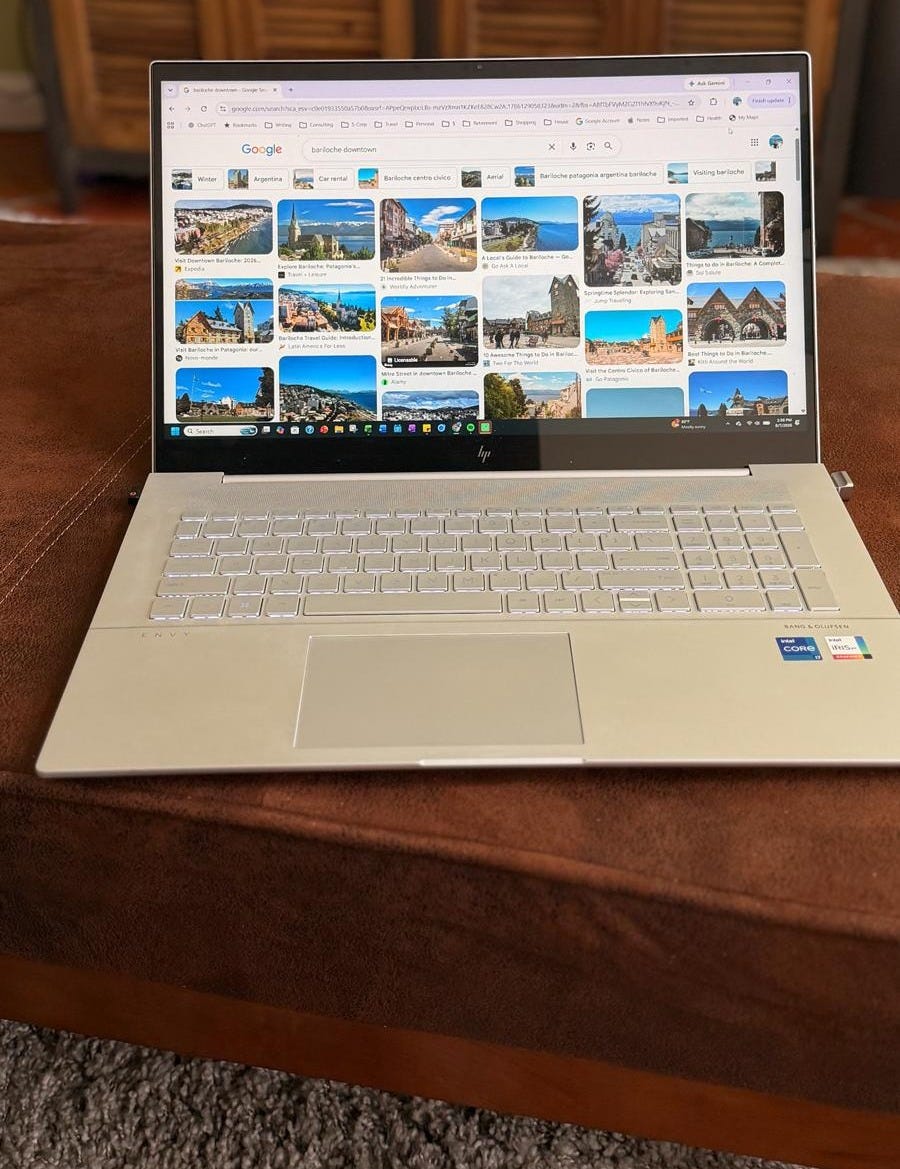
A few weeks ago, Nigel and I were planning our five months in South America. He was on one couch comparing flights. I was on the other, laptop balanced on my knees, with a “peaceful” Spotify playlist drifting through the room. I’ve learned that spa music is about the only thing that stops travel planning from turning into an Olympic event.
The television was playing a silent YouTube walking tour of Bariloche, and Nigel was trying to figure out how we could get there for Christmas. I was doing what I always do—opening Airbnb after Airbnb, zooming around Google Maps, trying to find the right place.
Not just somewhere with a nice view.
Somewhere locally owned.
The condo listings all looked similar—new, neutral, professionally managed, each with the same sweeping lake view. The chalets were different. Older. Pine trees instead of parking garages. The kind of place that looked as though someone’s grandmother might still spend summers there.
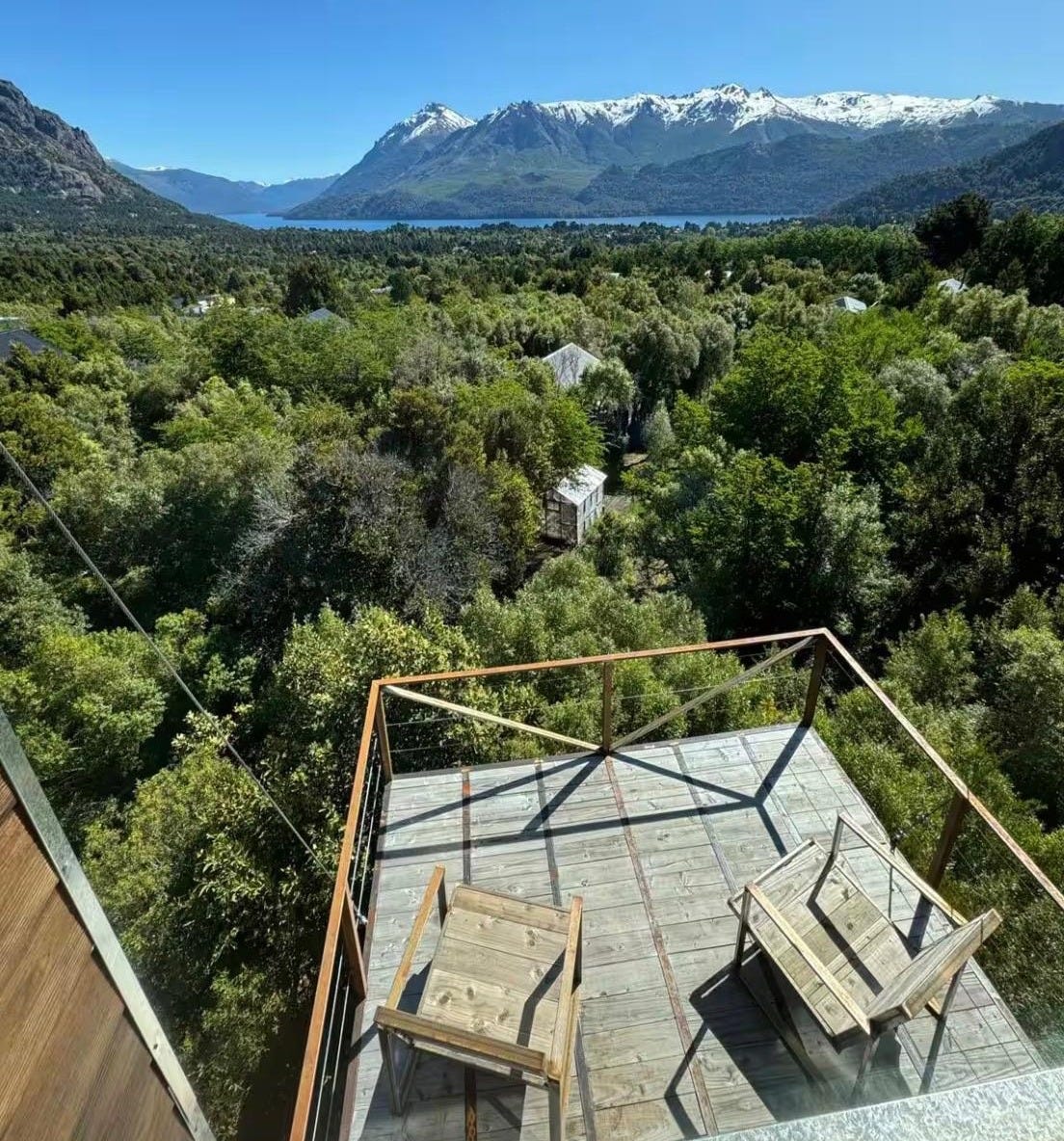
I found myself assuming the chalet belonged to a local family and the condo belonged to an investor.
Maybe that was true.
Maybe it wasn’t.
Either way, I was inventing stories about strangers to justify why one choice felt better than the other.
I closed another Airbnb listing because it looked too “touristy,” then immediately laughed at myself.
It was Bariloche.
At Christmas, people literally come here for chocolate, mountain views, and holidays with their families.
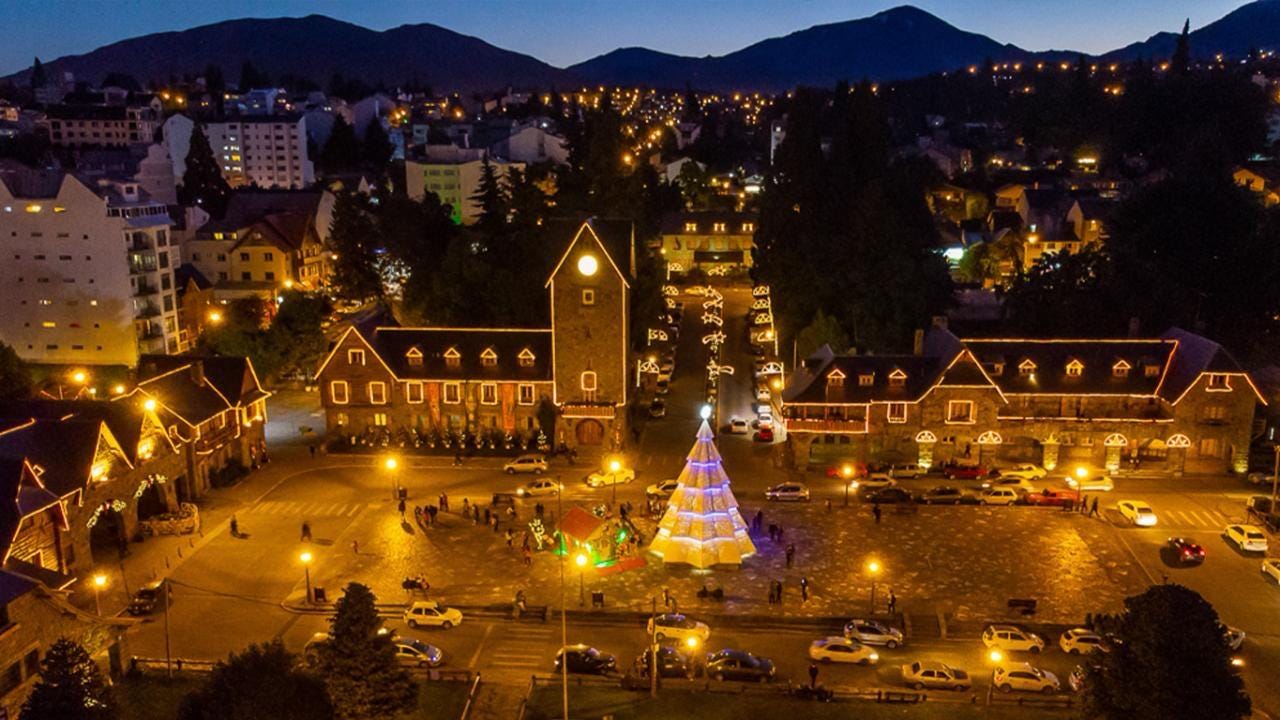
Why was I still searching for the one apartment that proved I wasn’t one of them?
I wasn’t really questioning Bariloche anymore.
I was questioning a version of myself I’d spent years trying to become.
Full transparency... finding an undiscovered café has always given me a ridiculous little thrill. As if I'd somehow unlocked the "advanced level" of travel—like I'd earned extra credit by avoiding the place everyone else was lining up for.
I'll admit it's possible I wasn't really looking for authenticity. I was looking for the feeling that I was doing travel "right."
Part of the reason it surprised me was that we’d just come from Bali, where slowing down had meant something completely different. Of course, no one thought we were Indonesian—and no one expected us to be. Still, by the end of our stay, we knew our neighbors, were invited into ceremonies and had somehow ended up doing karaoke next door. We had participated enough to be welcomed in.
There’s a difference.
The Galápagos finally broke the spell. Let’s be honest… No one goes there to live like a local. The idea is almost absurd. That’s when the whole idea started to unravel. Maybe the problem wasn’t my choice of destination. Maybe it was my assumption that every destination deserved the same version of me.
Travel writing loves tidy rules.
Live like a local.
Avoid the tourist traps.
Find the hidden gems.
They’re useful...until they aren’t.
I don’t think we were wrong to want to live like locals. For a while, that aspiration changed the way we traveled for the better. We stayed longer. We learned to stop filling every day with things to see. We found favorite cafés, learned people’s names, cooked dinner and did laundry and discovered what a place felt like on an ordinary weekday.
But maybe that was just one stage in how we learned to travel. The longer we’ve traveled this way, the more variations we’ve found. Sometimes we’re tourists. Sometimes we’re welcomed into people’s lives. Sometimes we settle into a routine that feels almost local. And sometimes we’re somewhere like the Galápagos, where pretending we’re anything other than visitors would be ridiculous.
Maybe slow travel hasn’t taught us how to live like locals. Maybe it’s taught us to notice the difference.
Somewhere between Bali, Bariloche, and the Galápagos, the question changed: What kind of visitor does this place need?
In Bariloche, maybe the answer was simply a tourist. In the Galápagos, a careful visitor who understands she’s temporary. One day, if Nigel and I eventually settle somewhere, I imagine the answer will be something entirely different: a neighbor.
Trust me, this has not made me any faster at choosing rental properties.
I still don’t know exactly where this leaves “live like a local.”
I’ll keep renting apartments. I’ll keep shopping at neighborhood markets.
I’ll keep embarrassing myself in Spanish.
None of that has changed.
The only thing that’s changed is this: I don’t think every destination is asking the same thing from me anymore.
For now, I think I’ll pay attention and see what kind of visitor each place is asking me to be.
💛Kelly
Is every place asking something different of us? If you’ve ever had a destination quietly change your thinking, I’d love to hear about it in the comments.
And if you think this conversation is worth having, please share this essay. Word of mouth is still how most people discover Benthall Slow Travel.
If you’d like to follow along as Nigel and I head to South America this fall, subscribe and come with us.
I don't think slow travel means living like a local — that's impossible. Origin matters; it's what gives you the whole context of a life in a place. But I do think it means "seeing less" and "living more." I've traveled to see, but it's only when I immerse myself in a culture through what the people there actually live that I feel I truly belong to a place and to its people.
And it can be as simple as the definition itself: traveling slow means staying long enough to experience part of other people's lives. Travel fast and you'll probably only see — you fill your days with things to look at, not to live.
What you wrote here — "Maybe it's to notice what kind of visitor this place is asking me to be" — goes even deeper for me. It doesn't replace the original idea of slow travel; it completes it. You don't arrive with one fixed version of yourself. You let the place tell you who to be and how to participate.
If you ever need it — here's a Chilean, ready to give you the view from the inside.🇨🇱
You asked what each place is asking of us, so here is the view from the other side of the table. Behind a counter you stop recognising the local by whether they blend in, because plenty of residents are rude and plenty of visitors are lovely. You recognise them by the second visit. Anyone can have a good first evening anywhere; what a place is actually asking of you is to come back on a Wednesday at lunch, when there is nothing to see and nobody is performing. That is also the honest answer to your apartment versus chalet problem: who owns it you cannot settle from a listing, but the return question you can answer with your own feet. And a practical note, since you are planning five months: the Wednesday lunch of a neighbourhood place appears in no statistic and on no review platform, because the people who go there do not review. If you want to know whether a district is alive, look at who has breakfast at seven, not at who dines at nine. In my trattoria in Milan that test has never once been wrong.