
How to Reset Your Perspective (So Your Life Feels New Again)
Why newness fades—and how to access it again without changing your life

We almost missed it the first time.
We’d gone to MONA, walked through the exhibits, and left sometime after five. On the way out, we passed through a room buzzing with energy—a stage set up under a marquee with lights spelling out “4PM.” We asked about it, and the usher mentioned there’s a daily performance every afternoon.
They’d just finished. We didn’t think much of it at the time, but it stuck just enough that we planned around it when we went back.
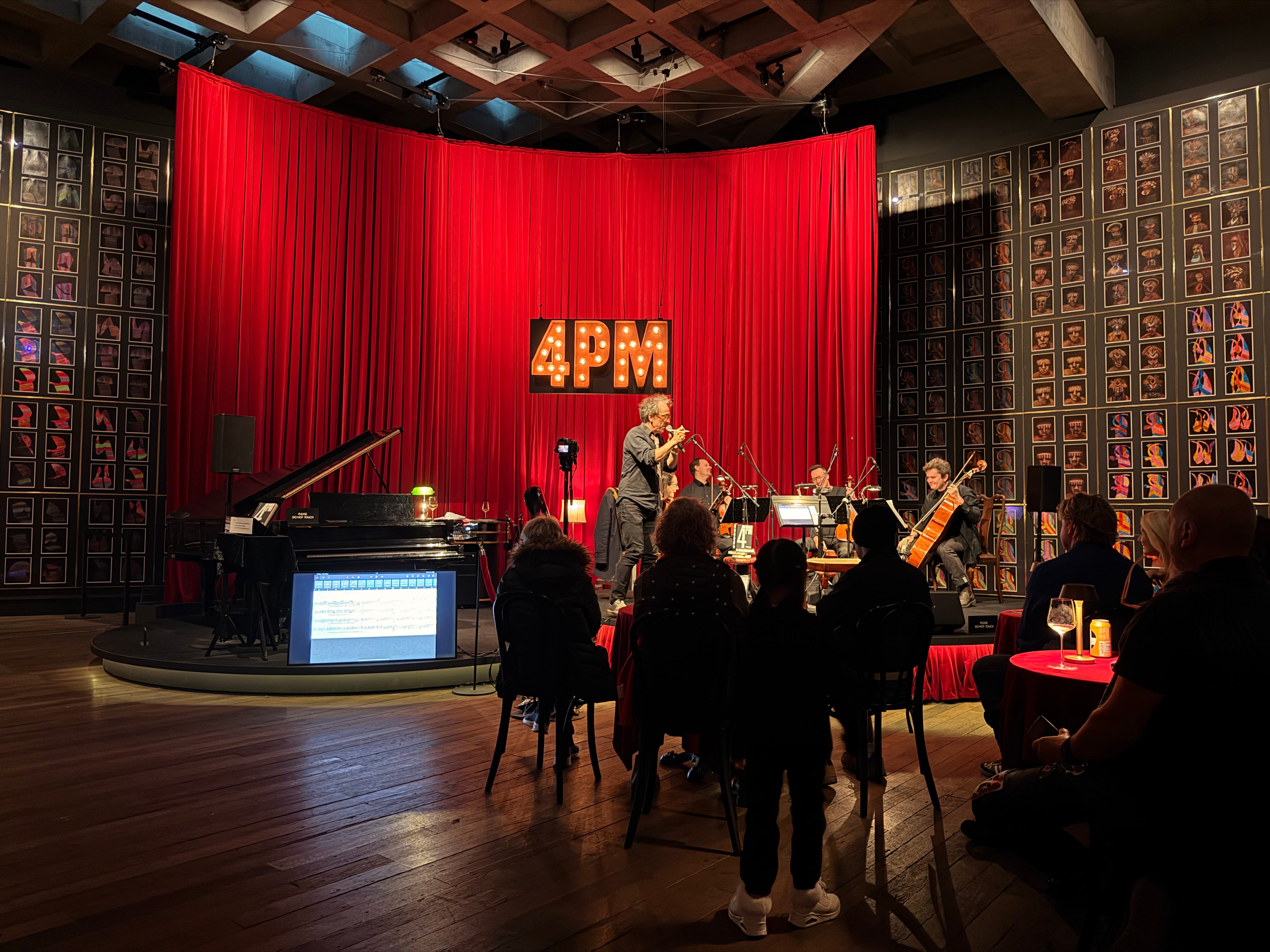
It looked like a standard performance. It wasn’t.
We got there a little early and took seats near the front. About ten minutes later, the musicians walked in and started unpacking their instruments, tuning quietly, settling into place without much ceremony. It didn’t feel like something was about to begin so much as something we’d wandered into mid-setup.
Then the composer pulled out an iPad and mirrored it to a screen the audience could see. He asked the musicians to open the score.
They hadn’t seen the music yet.
He showed them the notes as they were being played—adjusting, pausing, asking for feedback, trying something different when it didn’t quite land. There wasn’t a sense of performance so much as process. You could see decisions being made in real time, sometimes working, sometimes not.
It wasn’t polished or fixed. It was being built in front of us.
And they were seeing it for the first time, too.
That’s when it clicked. Every day at 4pm, they start with nothing—and no one in the room knows what it will become. The musicians show up, the audience shows up, and together they move through something that didn’t exist before that moment.
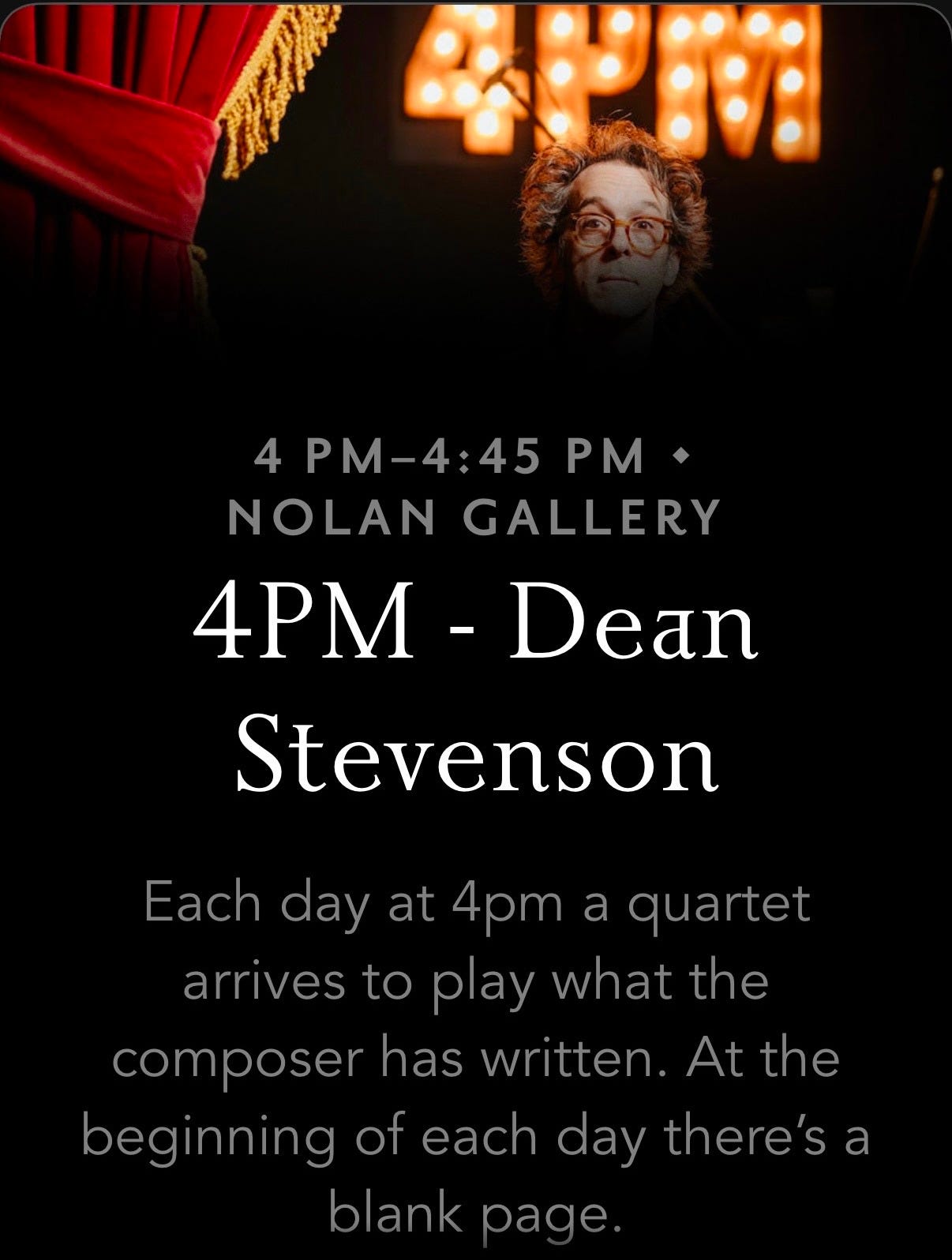
It wasn’t new because we hadn’t seen it. It was new because it hadn’t existed yet.
Most of us don’t experience anything like that anymore. We’re usually walking into something that’s already been decided.
A lot of what feels flat in our lives isn’t missing something. It’s repeating something—and that’s the part we don’t usually question.
We assume newness comes from new environments—a different place, a different plan, something external that feels like enough of a shift to matter. But most of what we do day to day isn’t designed to feel new. It’s designed to work.
And what works eventually becomes automatic.
For a long time, I thought the answer was fewer decisions, and in a lot of ways, it is. Reducing the constant low-level choosing—where to go, what to do, how to plan—creates space. It makes life easier to operate.
But there’s a second layer to that. It’s where this starts to shift. Once everything becomes automatic, you stop engaging with it at all. You stop thinking about it, you move through it faster, and you know what to expect before it happens. Once that settles in, even good things start to feel like background.
What changes this isn’t obvious.
This is where the free essay ends. The rest is how to actually use it.
