
The Life Next Door
What we hear through the walls matters more than we think

The week Kadek’s family traveled north for a cremation ceremony, the compound next door went quiet.
No children racing through the courtyard. No scooters returning home after dark. No grandparents calling instructions from somewhere deeper inside the family property. No karaoke drifting over the wall at night. Even Jojo stopped barking.
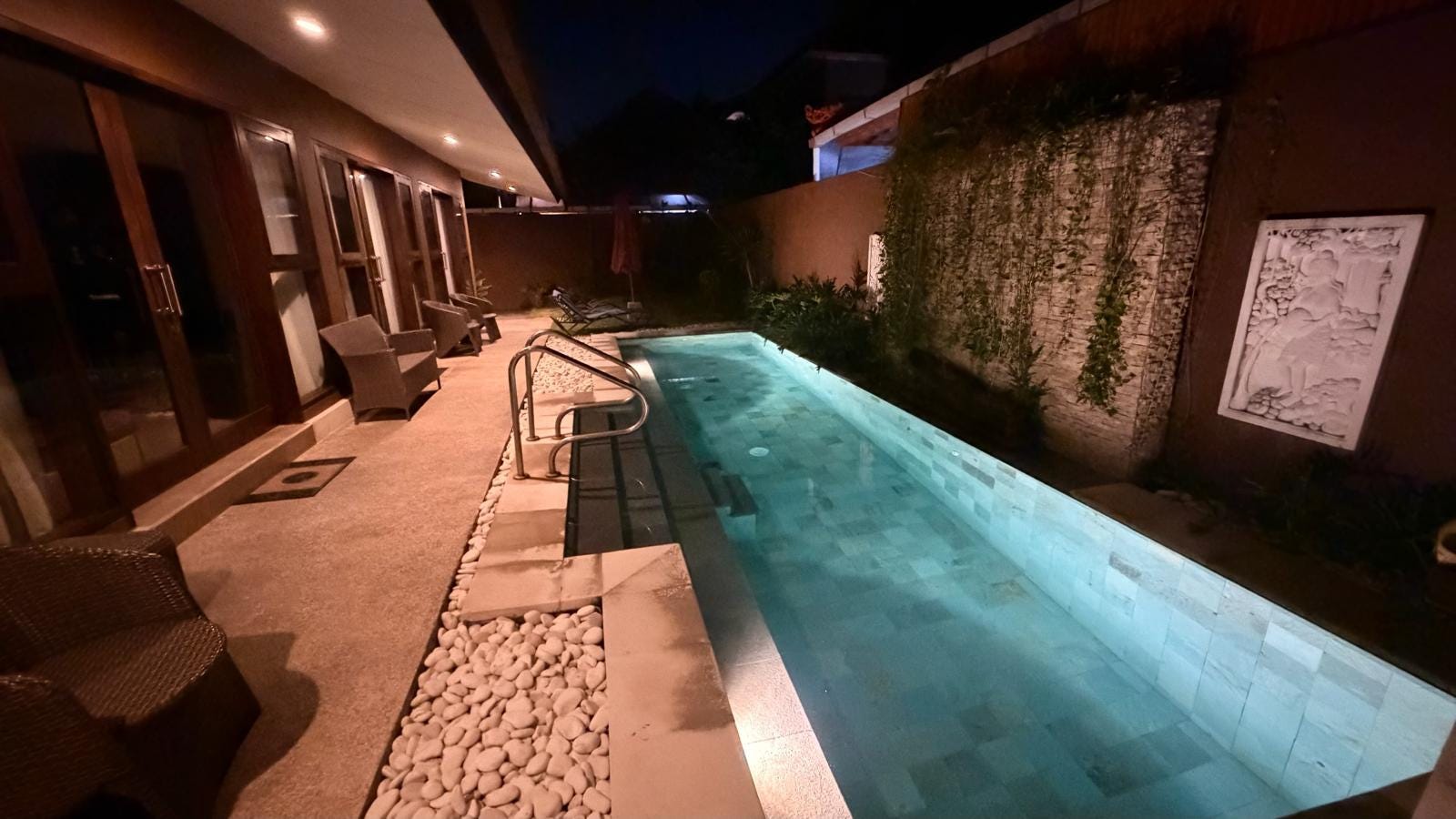
For the first couple of days, I couldn’t figure out why the villa suddenly felt so different. Then one evening beside the pool, while the sky dimmed into that heavy blue Bali seems to specialize in, the silence started feeling strangely wrong.
Back home in Houston, most neighborhoods sound surprisingly empty. Detached homes. Closed garages. Climate control humming behind sealed windows while people disappear indoors to escape the heat. Entire evenings can pass without hearing another human voice unless it’s coming through a television or a phone.
But in Bali, life spilled outward.
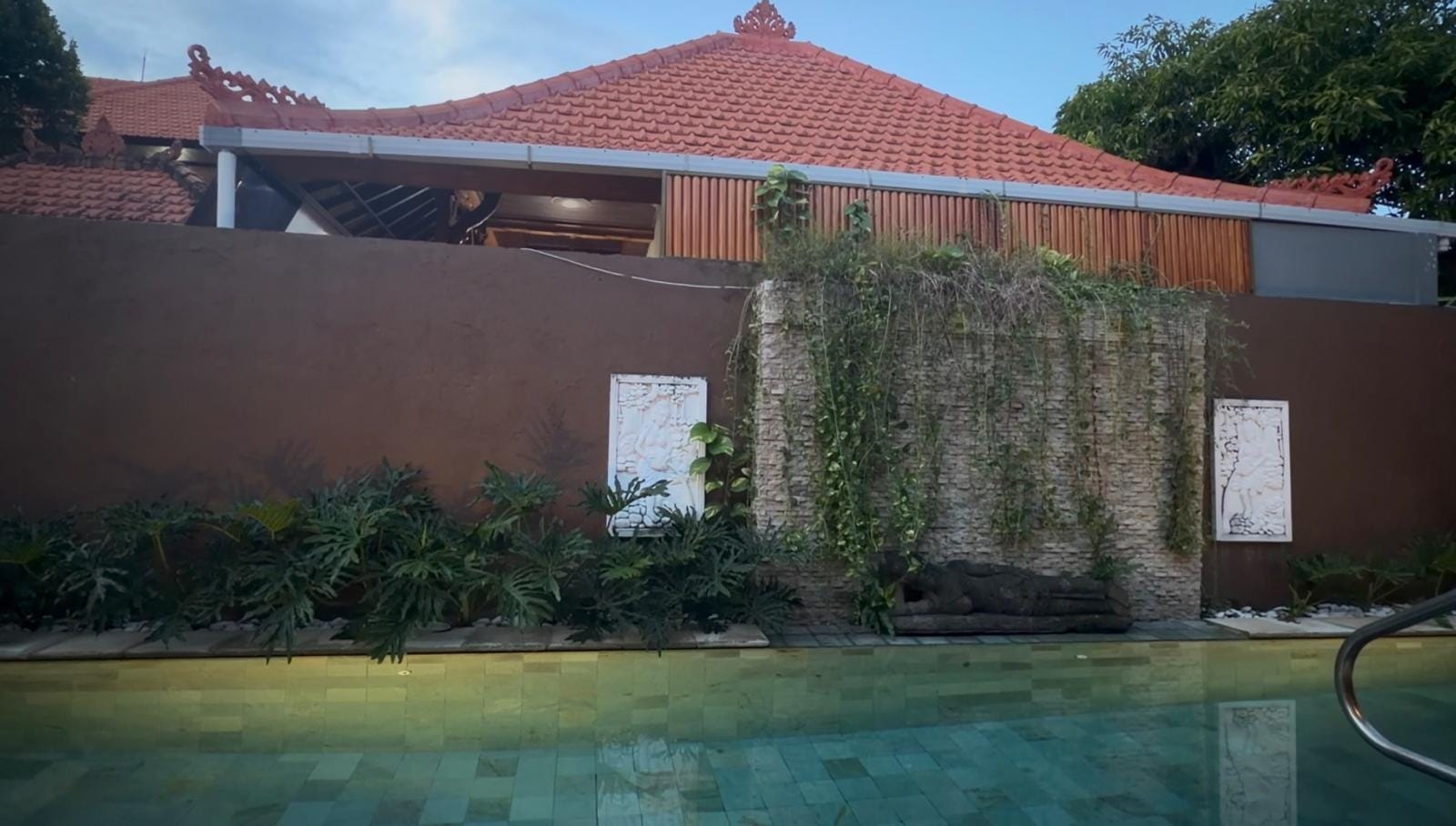
Our villa shared a long concrete wall with Kadek’s family property and temple next door. The wall stood nearly seven feet high, painted a soft brown that looked almost like suede in the evening light, with vines slowly creeping upward along parts of it. During the day it absorbed heat so completely that at night it still radiated warmth back into the air if you stood beside it long enough. It always smelled faintly of incense.
We couldn’t see over the wall itself, but the upper levels of the temple rose high enough above it that the lit rooftops still glowed against the night sky.
The first sound we really noticed was Jojo.
Jojo is the family dog — white with pink scars scattered across his body from where Kadek said neighbors had beaten him with sticks. He barked furiously anytime someone approached the gate, including me. One afternoon, Kadek’s youngest son walked over to the family offering stand near the entrance, grabbed a cracker, and placed it carefully into my hand before pointing toward Jojo.
I remember crouching down slowly while Jojo watched me nervously from a distance. He still didn’t trust me completely, but standing there beside the little boy, I realized I wasn’t afraid of him either. After a long pause, Jojo finally stepped forward carefully enough to take the cracker from my hand.
Then he immediately barked at me again anyway.
Which honestly felt fair.
But after that, his bark started sounding different to me. Not aggressive. Protective.
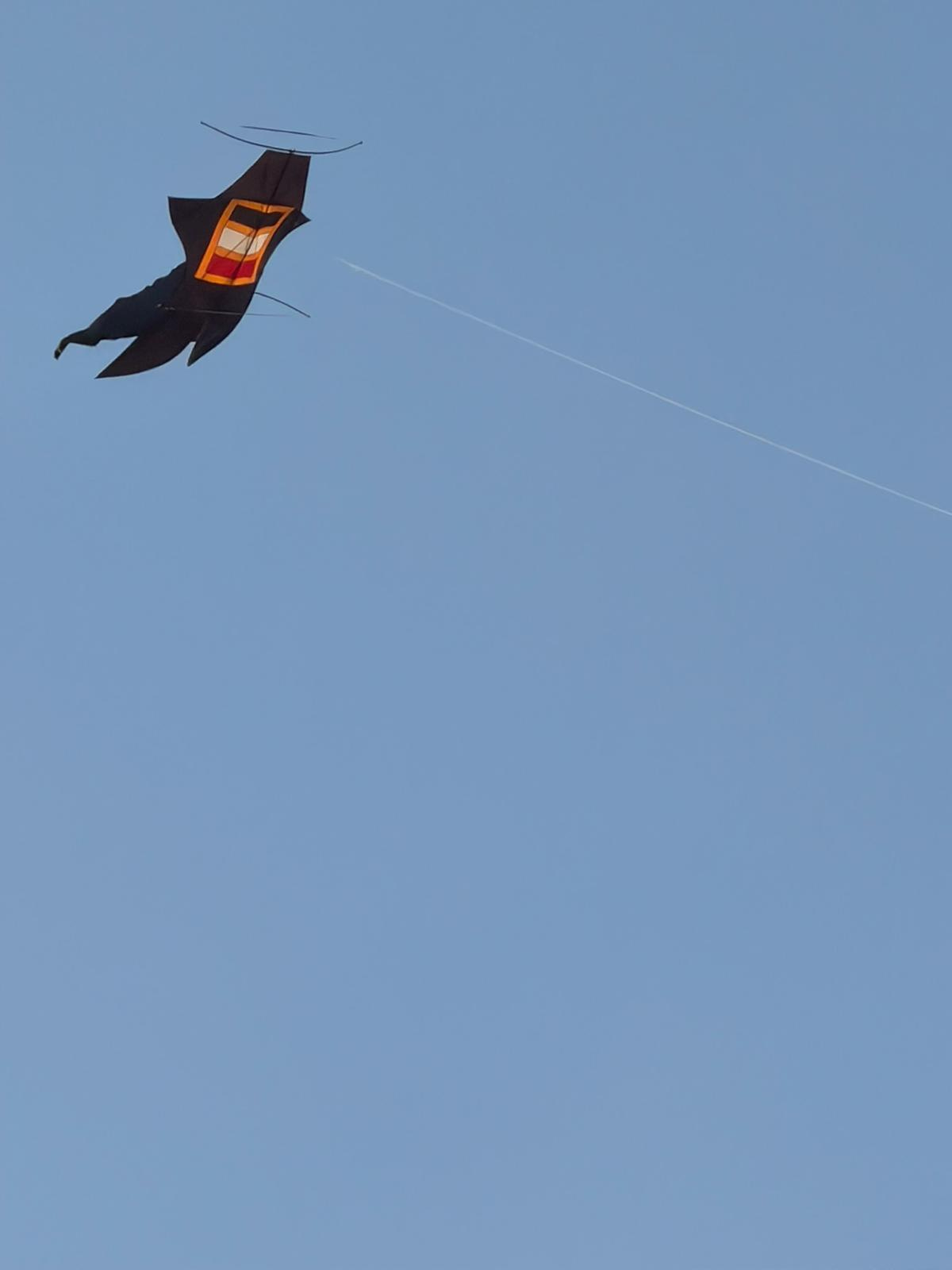
The metallic clank of the gate opening and closing throughout the evening. Scooters returning home after sunset. Roosters somewhere deeper in the neighborhood. Chanting drifting softly through the air. The strange rattling vibration of kites launched high above the rooftops most afternoons.
Nigel adapted to the sounds much faster than I did, having spent his early childhood in Southeast Asia. He welcomed the rooster almost immediately and recognized the kite sounds before I even understood what I was hearing. Sometimes we’d be sitting by the pool unable to see any kites from the villa itself, and Nigel would suddenly stand up and wander down the street following the rattling sound overhead until he eventually found one drifting somewhere above the neighborhood.
I used to laugh watching him do this.
Eventually I started listening for them too.
Then there were the grandparents.
At some point, the voices became recognizable. Not understanding the language — recognizing the people. I could tell when the grandparents were outside with the children. I could tell when visitors had arrived. I could tell when someone was laughing near the gate.
The grandfather’s voice usually sounded playful and encouraging while the grandmother’s carried the sharper tone of someone trying to keep small children from accidentally launching themselves off balconies.
And strangely, instead of making me feel crowded, it made me feel less alone.
At first, I had felt slightly uncomfortable knowing the family could see directly into our living room from one of the balconies. I wasn’t used to life unfolding quite so close. Back home, privacy is treated almost like infrastructure. Entire neighborhoods are designed so nobody accidentally inconveniences anyone else with evidence of their existence.
Gradually the sounds next door started interrupting different things — phone scrolling, work, routine. Sometimes Nigel and I would pause conversations beside the pool just to listen. I even started recording short videos because I wanted to remember the sounds later.
At night, after the pool light clicked off, we’d fall asleep to distant scooters, and the muffled sounds of the neighbors slowly quieting down behind the wall.
On Sundays especially, the courtyard felt alive from morning until late evening as relatives arrived throughout the day carrying food, laughing near the gate, children weaving between adults while scooters came and went continuously.
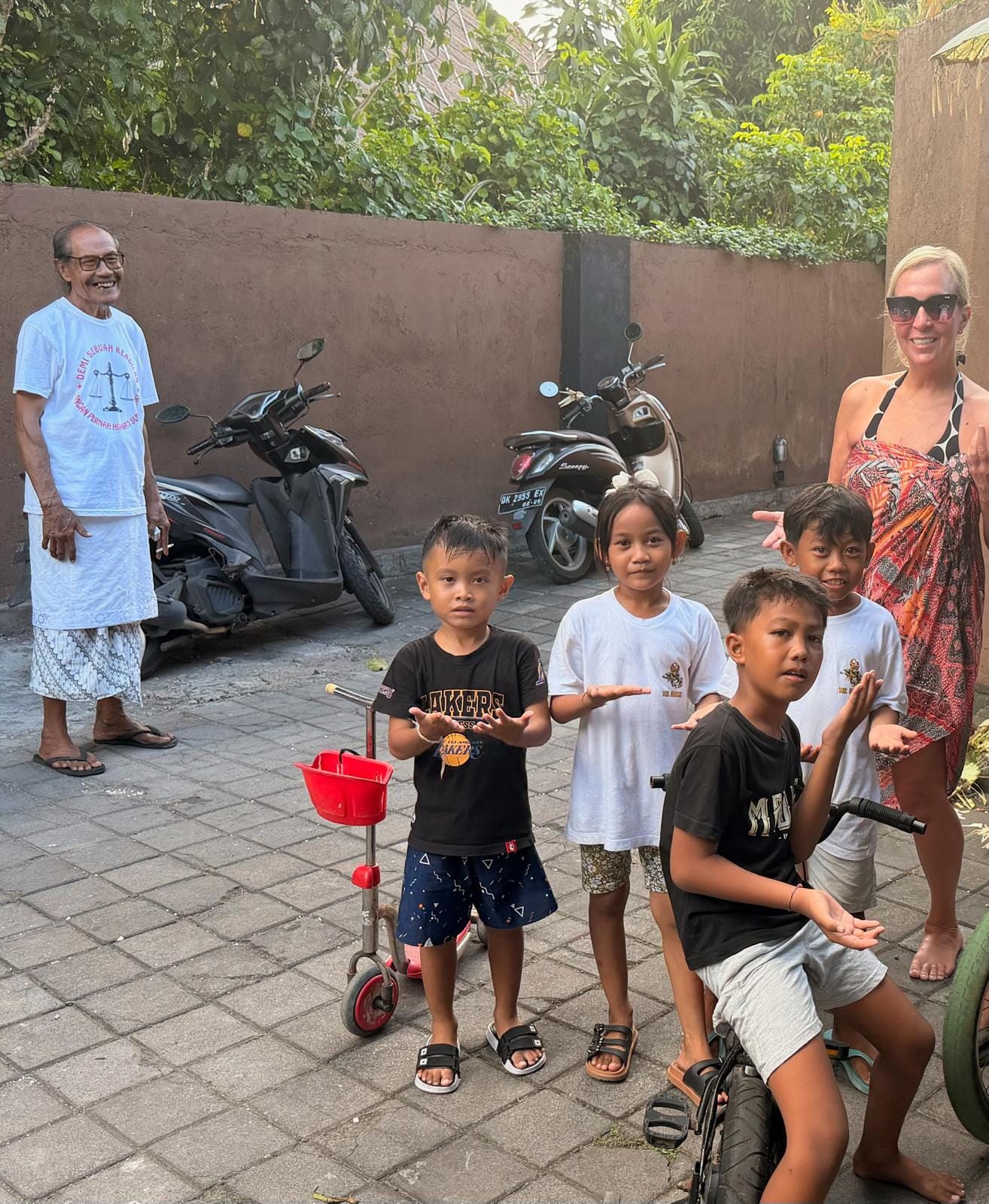
One of Kadek’s youngest sons started appearing on the balcony around the same time most evenings, enthusiastically waving toward the pool for several straight minutes while I waved back below.
The parts of Bali that stayed with me most weren’t the attractions.
They were the sounds of local life slowly becoming familiar.
The air during those evenings always felt warm and damp, but never oppressive. The wall still radiated heat from the day while incense drifted constantly through the courtyard. A few blocks away, Sanur Beach came alive every evening with families gathering beside the water while enormous kites rattled overhead and smoke from the night market drifted through the streets smelling faintly of barbecue.
And in the middle of all of it, the family next door kept moving through its nightly rhythms beside us.
Children arguing.
Someone sweeping.
A gate opening.
A dog barking.
Grandparents calling instructions from somewhere unseen.
Nothing extraordinary.
And somehow, that became the thing that felt extraordinary.
I increasingly wonder if modern environments separate us from more than we realize. So many are designed around privacy and noise reduction that hearing other humans simply continuing through their ordinary lives starts to feel unusual.
Maybe it isn’t supposed to.
Even now, as I write this, the kites are rattling overhead somewhere beyond the wall.
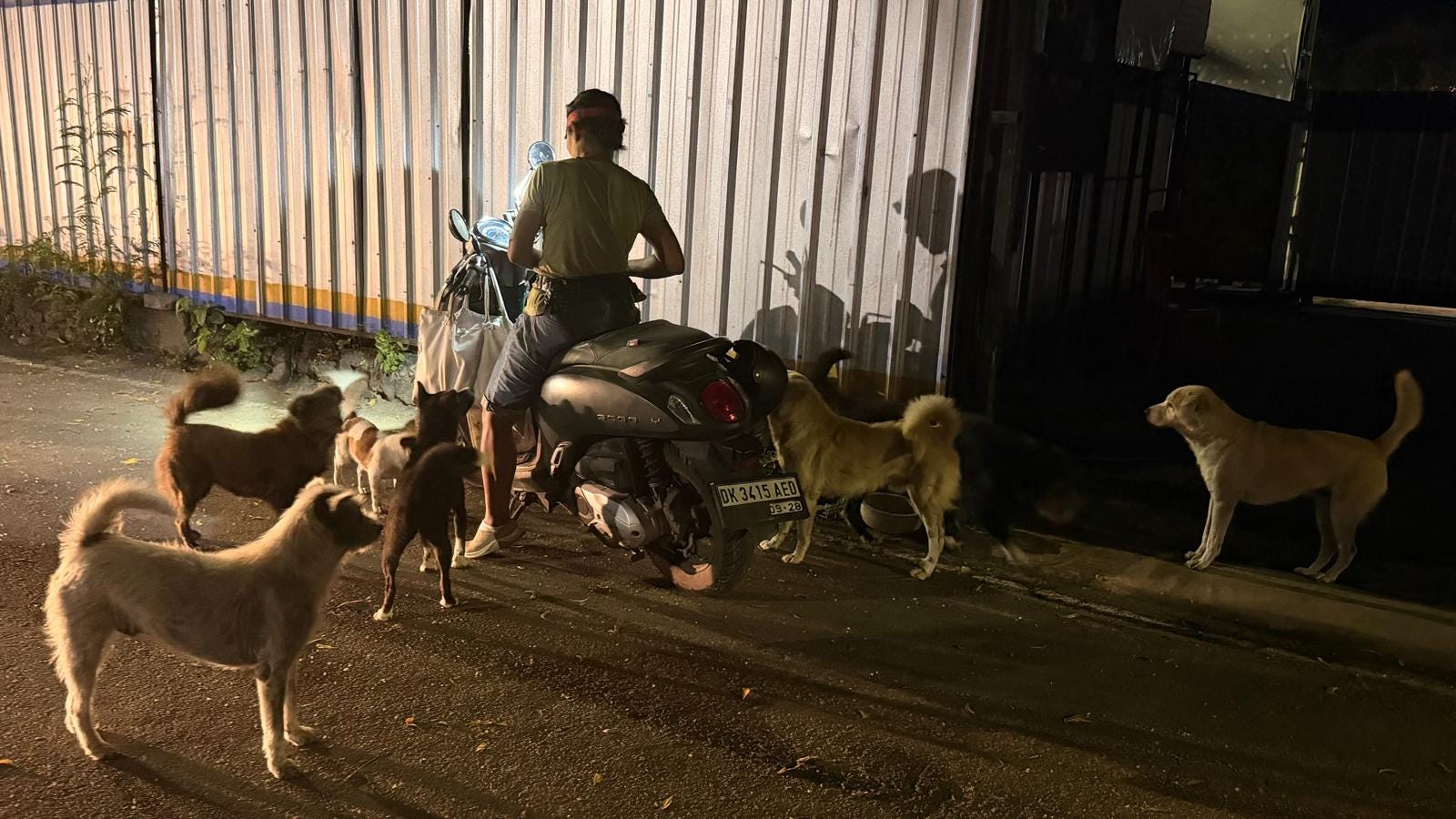
By the time Kadek’s family returned from the cremation ceremony, I noticed the difference immediately.
Jojo barked before I even saw anyone arrive.
Then came the familiar gate clank. Voices. Scooters. Children.
Life returning to the compound next door.
Some part of me had been waiting for it to come back.
💛 Kelly
I’ve been thinking a lot lately about participation, neighboring life, emotional vividness, and the quiet ways modern environments shape how connected we feel to the world around us. This piece is part of a larger series exploring those ideas through our time in Bali.
If these essays resonate with you, you can subscribe below to follow the series as it unfolds.
I think this kind of life that is connected with the people around you is how it is supposed to be Kelly. Not isolated, not cut off from your neighbors. Lovely story, and I love the picture of you with the kids. 🩵
Love your perspective.
It's sad that in so much of modern societies we have cut ourselves off from our neighbours - to the point that we can even begrudge their very presence.